The Anterior Hip Program: Where Digital Planning Meets Positioning
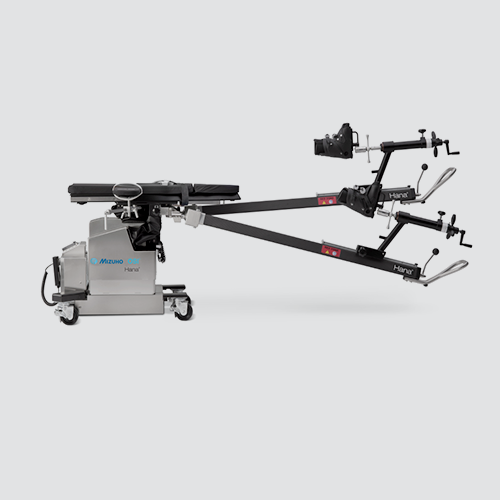
Strong anterior hip programs are built on two decisions made before the incision: what implant goes in, and how the patient is positioned to put it there. One is a software decision. The other is a hardware decision. The programs that grow fastest treat them as one workflow.
The plan: digital templating with TraumaCad
Brainlab TraumaCad starts the case on the calibrated X-ray. The surgeon templates the cup and stem, checks offset and leg length, and confirms sizing against a library of thousands of implant templates. The plan is saved to PACS and travels with the patient.

The position: the Hana table
Anterior-approach hip replacement depends on independent leg positioning and controlled traction, which is what the Mizuho OSI Hana table was designed for. Its radiolucent structure keeps fluoroscopy views clean, so the team can check the executed cup position and leg length against the plan while the patient is still on the table.
Plan confirmed, on the table
This is where the two halves meet. The TraumaCad plan defines the target. Intraoperative fluoroscopy over the radiolucent table shows the reality. Comparing the two during the case, not after it, is what turns templating from paperwork into a safety loop.
One partner for both
Brainz represents both sides of this workflow in the UAE and GCC: Brainlab planning software and Mizuho OSI positioning. One team handles demonstration, installation, training and support, so the program arrives as a whole rather than as parts. Talk to us about building it at your hospital.
Product availability, indications, regulatory status and clinical use vary by country and follow manufacturer documentation and applicable regulatory approvals. Trademarks belong to their respective owners.