Pediatric Spine Deformity: Why Navigation and Low Dose Imaging Matter Most for the Youngest Patients
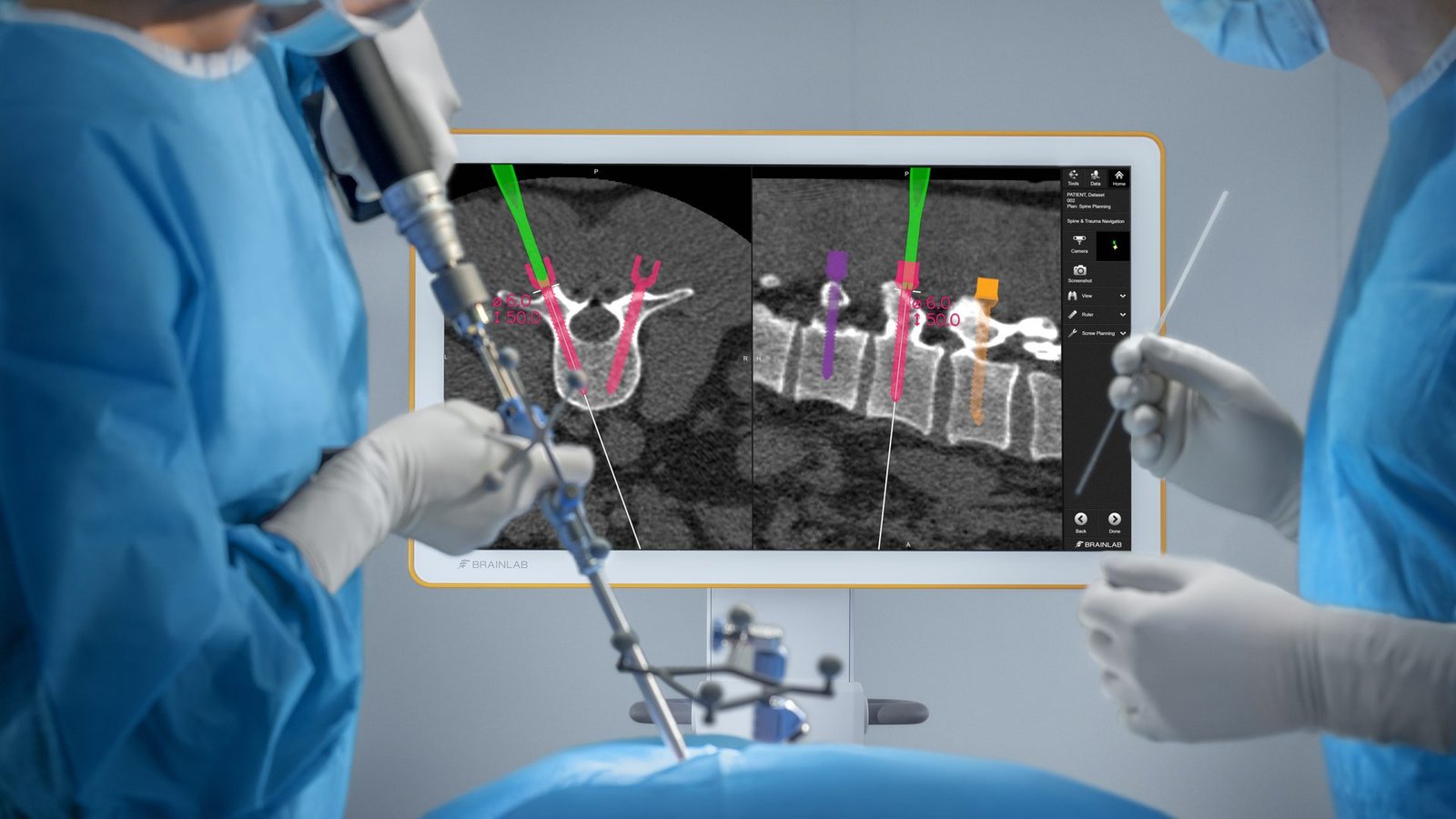
Pediatric spinal deformity surgery runs on a different risk calculation from adult spine. The pedicles are smaller, the anatomy is often rotated or malformed, the construct has to hold for decades rather than years, and the patient has a whole lifetime ahead in which every millisievert received today still counts. Navigation and intraoperative imaging answer the first three points well. The fourth is the reason radiation protocol belongs in the same conversation, not a separate one.
Adoption has moved quickly, including in the youngest patients
A 2026 review of the NSQIP Pediatric database covering 37,594 children who had posterior spinal fusion for deformity between 2016 and 2022 found navigation used in 8.6 percent of cases overall, rising from 2.0 percent in 2016 to 15.6 percent in 2022. Navigation was more common in longer constructs, in cases with pelvic instrumentation, and in kyphosis. Notably, there was no significant difference in navigation use between children aged 9 and under and those aged 10 to 17, so the youngest patients are not being left out.
A separate national review of 3,121 children under 10 operated for early onset scoliosis between 2010 and 2023 reported navigation rising from zero percent in 2010 to 38.0 percent in 2023. Both studies found the same specialty split: navigation was used in 17.7 percent of pediatric neurosurgery cases against 8.3 percent of pediatric orthopedic cases in the NSQIP series, and 24.4 percent against 14.1 percent in the early onset series. The early onset study also reported an access gap linked to insurance status, a reminder that adoption is shaped by funding as much as by clinical preference.
These are United States datasets. The regional picture in the GCC is different in scale, but the direction of travel in tertiary pediatric units is the same.

What the outcome data now shows
The largest study published on this question reviewed 15,917 pediatric patients with idiopathic scoliosis who underwent posterior spinal fusion, of whom 1,599 were navigated. After matching for the variables that independently predicted revision, instrumentation revision rates were lower in the navigated group at 6 months, 2 years and 10 years: 1.1, 2.7 and 3.8 percent against 2.1, 4.4 and 6.3 percent.
The same study found no significant difference in postoperative neurological deficit between the two groups, and the NSQIP series found navigated cases took longer in theatre. That is the honest version of the argument. The measurable benefit in this evidence is the durability of the construct and the number of children who avoid a second operation, not a claim of fewer neurological events. Both studies are retrospective database reviews, level III evidence, and neither is a randomized trial.
Dose is the pediatric question, and protocol answers most of it
A 2026 prospective study from OLVG in Amsterdam, published in the North American Spine Society Journal, tested a pediatric specific low-dose three-dimensional protocol in adolescent idiopathic scoliosis surgery. The median intraoperative 3D dose fell from 57.7 to 24.6 cGy per cm squared, a reduction of 57 percent, with no significant loss of signal-to-noise or contrast-to-noise ratio. Surgeons scored both protocols as adequate for pedicle screw navigation.
The same study made a second point that is easy to overlook. Two-dimensional fluoroscopy contributed substantially to total intraoperative dose, with mean totals ranging from 18.5 to 106.7 cGy per cm squared on the standard protocol and 15.9 to 61.3 on the low-dose protocol, depending on frame rate. Lowering the number of projections, adjusting entrance dose and disciplining frame rate are all decisions a department makes for itself, and they cost nothing.
The counterpoint worth reading before you buy
A 2026 comparative study from the Hospital for Special Surgery looked at 121 patients with idiopathic scoliosis, 80 of them operated with robotic assisted navigation that relies on a preoperative CT with fluoroscopy-to-CT registration in theatre. Intraoperative fluoroscopy dose was slightly lower than freehand, 0.4 against 0.5 millisieverts. Total perioperative dose went the other way, 12.5 against 0.5 millisieverts, roughly twenty-five times higher, because of the preoperative CT that the workflow requires.
The lesson is not that navigation raises dose. It is that the imaging workflow decides the dose, and the workflow is a purchasing decision. A pathway that acquires one low-dose intraoperative three-dimensional scan and registers the patient from it replaces the preoperative CT rather than adding to it. In a child, that difference is the whole argument.
What this means for the technology choice
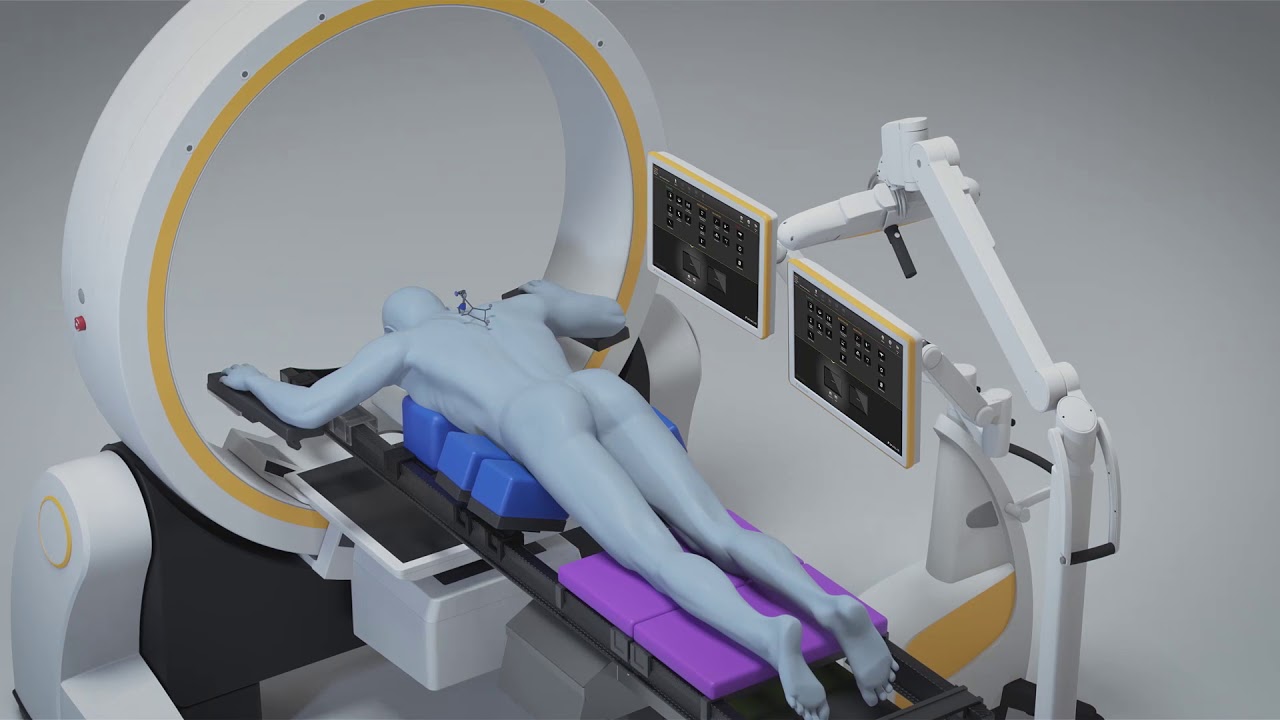
Brainlab Spine and Trauma Navigation provides real-time guidance on an open, vendor-independent platform, from incision planning through pedicle and SI screw placement, and supports radiation-free surface matching as well as automatic registration via Loop-X. Loop-X is a mobile imaging robot that delivers intraoperative 2D and 3D cone-beam CT with off-centered acquisition and dose reduction, and registers the patient to navigation automatically.
Read against the evidence above, three properties matter for a pediatric program. Automatic registration removes a manual step in a case where anatomy is already atypical. Intraoperative cone-beam CT can stand in place of a preoperative CT rather than on top of it. And an open platform keeps the hospital free to choose implants separately from the navigation decision. Elements planning and the Curve platform extend the same coordinate space to cranial and trauma work, which is how a pediatric unit justifies utilization across a whole year rather than a single case list.
Protocols, presets, indications and regulatory status should be confirmed against current manufacturer documentation for the specific configuration a hospital installs.
What a hospital should settle before the first case
Who owns the pediatric dose protocol, and is the pediatric preset the default rather than an option someone has to remember to select? What is the department policy on fluoroscopy frame rate, and is anyone measuring it? Does the intended navigation workflow require a preoperative CT, and if so, has that dose been counted in the business case? How is screw position verified before closure, and what is the threshold for revising a screw intraoperatively? Who trains the scrub team, not only the surgeon, and how many supervised cases does the unit plan before running unassisted?
Brainz supports spine programs across the UAE and the wider GCC with installation, surgeon and staff training, intraoperative support and after-sales service. If a pediatric spine service is on your roadmap for the coming year, the protocol conversation is worth having before the purchase conversation. Talk to our clinical team and we will walk through both.
Product availability, indications, regulatory status and clinical use vary by country and follow manufacturer documentation and applicable regulatory approvals. Trademarks belong to their respective owners.