Adante: One Orthopedic Platform for Knee, Hip and Fracture Work
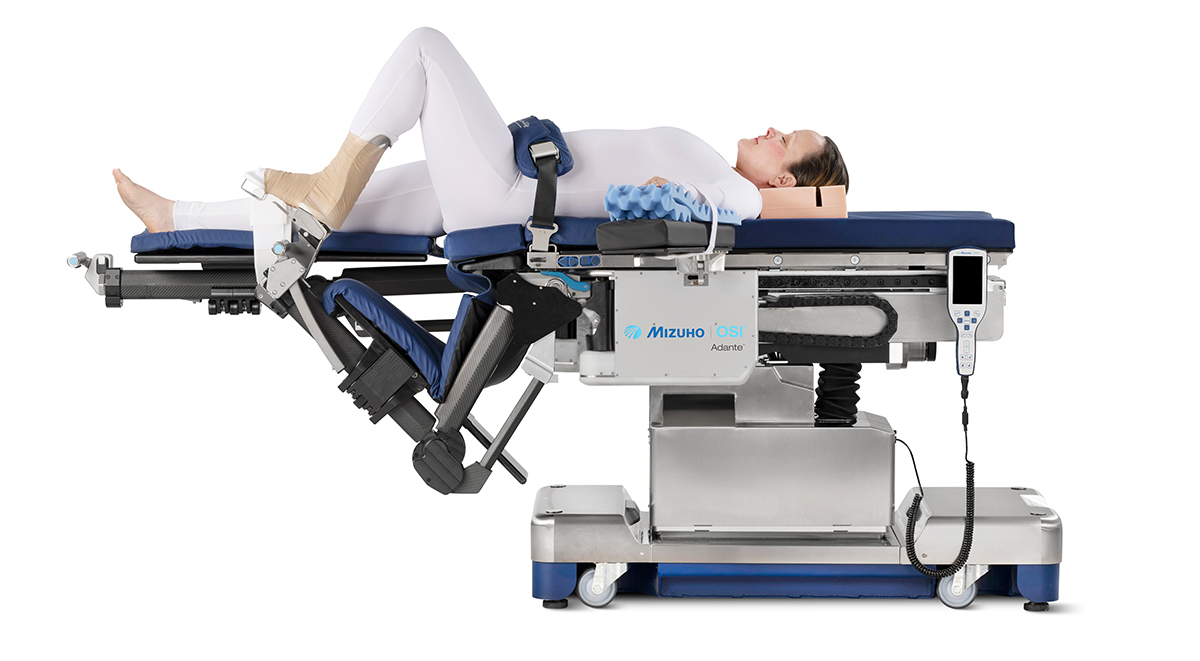
Joint replacement volume is rising faster than operating room capacity. Robotic-assisted hip and knee arthroplasty is projected to reach roughly 70 percent of all joint replacements by 2030, and GCC hospitals grew their robotic joint volumes by more than 20 percent between 2023 and 2025. When case numbers climb, the quiet limit is not the implant or the robot. It is how quickly a team can position a patient, keep the field exposed, and reset for the next case. That is where the surgical table earns its place, and it is the reason Mizuho OSI built Adante.
One platform for knee, hip and fracture
Adante is the next-generation orthopedic platform Mizuho OSI previewed at AAOS 2025, from a company that has focused on surgical tables for more than 45 years. It is engineered for versatility, so a single table serves hip, knee and fracture work rather than committing a room to one procedure type. For a busy arthroplasty service, that flexibility is what keeps a room turning through a mixed list without swapping equipment between cases.
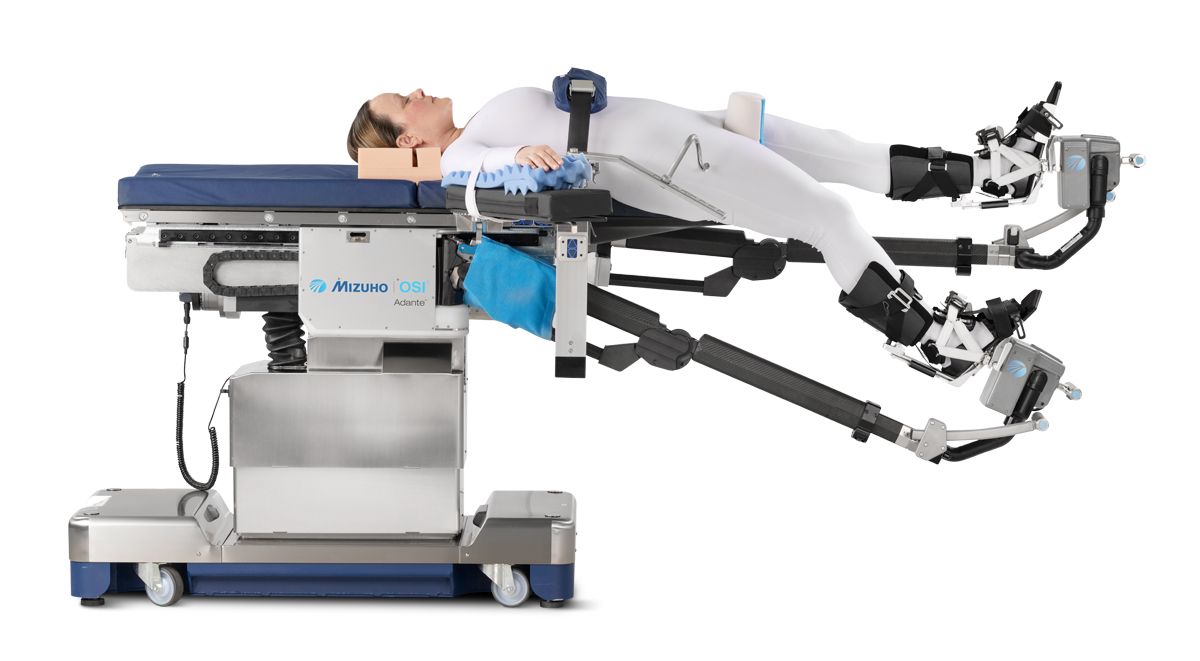
A knee that positions itself
The knee side of Adante is about access and control. The FlexLation Spar adds degrees of freedom that bring the surgeon closer to the joint, with seamless flexion from full extension to deep flexion and a position-and-hold action that reduces the manual effort of intraoperative repositioning. A quick foot release gives the team added stability and support, then frees the foot on demand for soft tissue and balance assessment. In practice that means fewer hands tied up holding the leg, and a more repeatable setup from case to case.
The anterior approach hip, with the femur lifted
Anterior approach hip replacement rewards exposure, and exposing the resected femur is one of its harder moments. Adante introduces Femur Lift technology that empowers both surgeon and staff to expose the femur during the anterior approach, rather than relying on manual retraction alone. The platform also gives unimpeded C-arm access for comprehensive lower-limb imaging, which matters when the plan depends on intraoperative confirmation. This puts Adante alongside the anterior approach heritage of the Mizuho OSI Hana table that many surgeons already know.
Why positioning is now a capacity decision
The wider evidence is consistent on one point. Robotic arthroplasty does not automatically shorten a case, but hospitals that run high joint volumes with streamlined workflow report lower episode costs, shorter length of stay and higher rates of discharge to home. The gains come from team integration and removing wasted motion, not from any single device. A table that lets one team share control, read back-lit status at a glance and reset quickly is part of that same efficiency story. In a region where aging populations and medical tourism lifted orthopedic demand close to 15 percent in 2025, positioning is no longer a background detail. It is a capacity decision.
What Brainz adds
Brainz brings Adante to orthopedic teams across the UAE and GCC as part of a wider orthopedic technology program, from table selection to installation, staff training and after-sales support. The right platform should make a high-volume list feel calmer, not busier. The best way to judge that is on your own cases, and a conversation with our team is the place to start.
Product availability, indications, regulatory status and clinical use vary by country and follow manufacturer documentation and applicable regulatory approvals. Trademarks belong to their respective owners.