Cochlear Implant and Lateral Skull Base Surgery: Where Navigation Is Heading
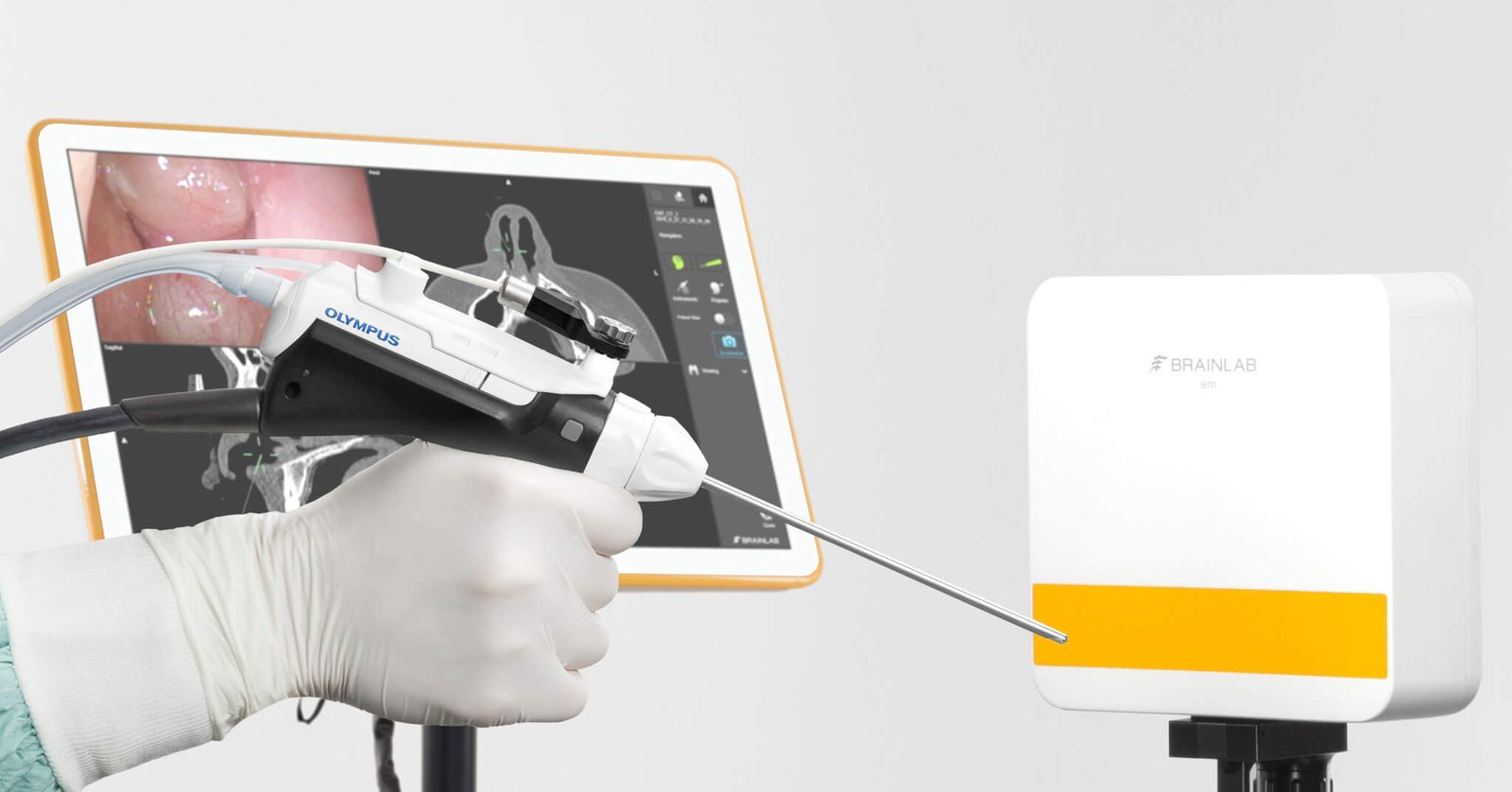
The temporal bone is one of the most demanding places to operate. The facial nerve, the ossicles, the cochlea and the carotid sit within a few millimeters of each other, and the surgeon works through a small window. Navigation and robotics are now entering this territory, and ENT teams across the GCC are starting to ask what they can realistically expect from them.
Why the lateral skull base is different
In sinus surgery, navigation follows large, well mapped air spaces. In the lateral skull base and the middle ear, the margin is smaller. A drill path to the cochlea passes close to the facial nerve, and the tolerances are measured in fractions of a millimeter. That raises the bar for registration accuracy, and it is why the field has moved more slowly than sinus navigation.
What the accuracy data shows
The published work is encouraging, and it is still early. A 2018 study in European Archives of Oto-Rhino-Laryngology built a portable navigation system for endoscopic lateral skull base surgery and reported a target registration error of 0.28 mm in an ex vivo temporal bone model, with navigated instruments working alongside the endoscope across 36 cadaver procedures. A 2020 cadaver study in Scientific Reports tested non-invasive registration for cochlear access using a robotic arm and reported a mean target error of 0.67 mm, with the tunnel kept clear of the facial nerve and ossicles in all cases. The authors describe their own work as preliminary: five specimens, adult cadavers only.
Both studies point the same way. Millimeter and sub-millimeter accuracy is achievable on the bench. Clinical confirmation across routine patients is the part still being built.
Robots and the speed of electrode insertion
The most active area is robot-assisted electrode insertion. A 2024 review in Frontiers in Neurology explains the rationale: surgeons insert electrode arrays by hand at roughly 1.6 mm per second on average, while robotic platforms can insert at 0.1 mm per second or slower. Slower and steadier insertion reduces force inside the cochlea, and one comparison cited in the review linked a slower rate with better hearing preservation. The same review is careful to say that a clinical benefit for hearing outcomes is not yet established and that larger comparative studies and cost analyses are needed.
For a hospital, that is the honest summary. The technology is real and improving. The evidence for patient outcomes is still catching up with the engineering.
Navigation and monitoring belong together
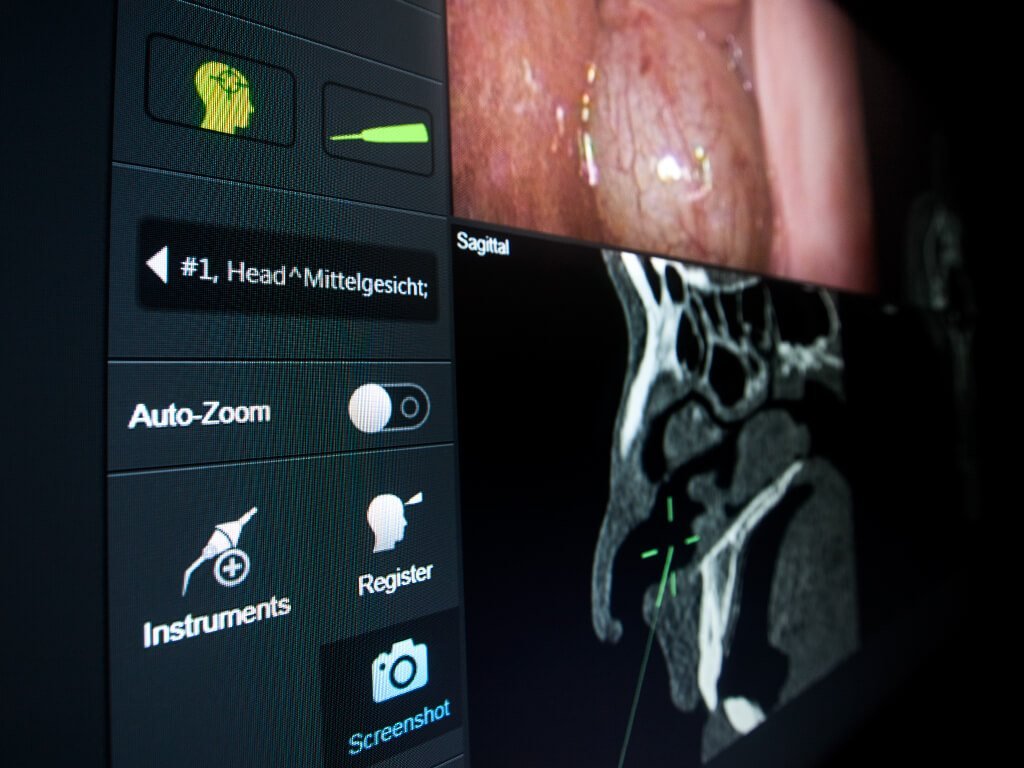
Near the facial nerve, position and function are two separate questions. Navigation answers the first, and intraoperative nerve monitoring from Langer Medical answers the second, supporting protection of the facial and laryngeal nerves in ENT, skull base and thyroid procedures. A program that plans to grow into lateral skull base work should think about both as one workflow, not as two purchases.
What ENT teams in the GCC should ask
The Brainlab ENT application that Brainz represents, electromagnetic ENT navigation, is positioned for endoscopic sinus surgery, where it removes line-of-sight limits and supports orientation in revision cases and distorted anatomy. Our existing article on sinus and skull base navigation covers that ground. For otology and cochlear implant work, the right questions come before any purchase.
Which indications are covered for the specific system and software version? What registration method is used, and what accuracy has been shown in routine use rather than on the bench? How does the system fit the surgeon's workflow, imaging and monitoring? What training and support will the team receive for the first cases? Brainz works with ENT teams to answer these questions case by case, together with Brainlab and the clinical team. When a conversation about your ENT program is useful, we can start from your own case mix.
Product availability, indications, regulatory status and clinical use vary by country and follow manufacturer documentation and applicable regulatory approvals. Trademarks belong to their respective owners.