Nexstim Beyond Mapping: Navigated TMS in Therapy and Where the Field Is Heading
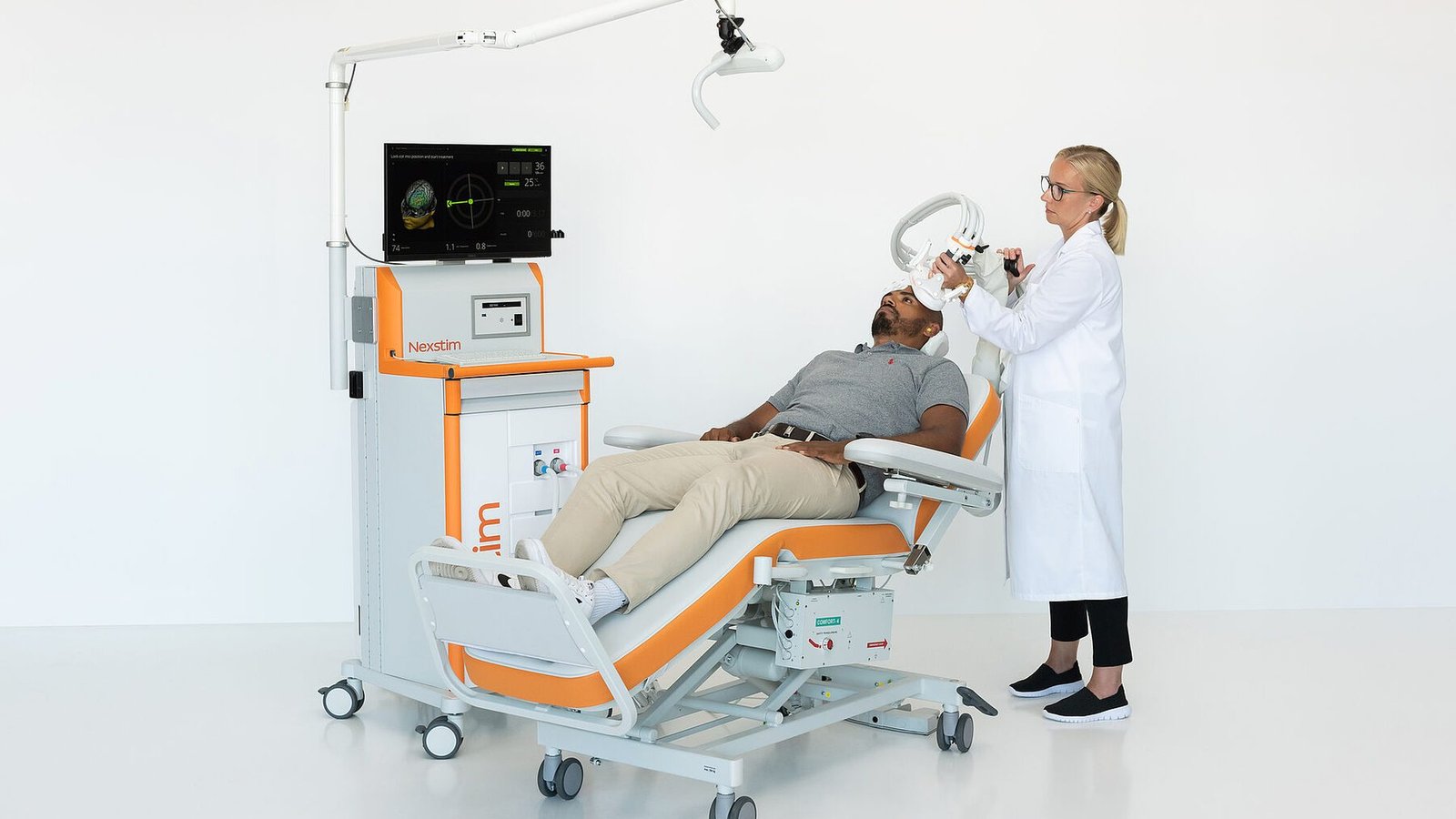
Most neurosurgeons meet navigated transcranial magnetic stimulation (nTMS) as a mapping tool. A coil is guided over the patient's own 3D MRI, single pulses locate the primary motor cortex and, with NexSpeech, the cortical speech areas, and the resulting map goes into the surgical plan. That is the use Brainz represents in the UAE and the GCC, and it is described in our earlier pieces on navigated brain mapping and language mapping.
The same platform has a second life. Delivered repetitively rather than as single pulses, navigated TMS is a therapy, and in 2026 the list of what it is cleared to treat has grown noticeably. This piece separates what is cleared from what is still being studied, and looks at what the therapy side means for a hospital that already owns, or is considering, a mapping system.
One platform, two jobs
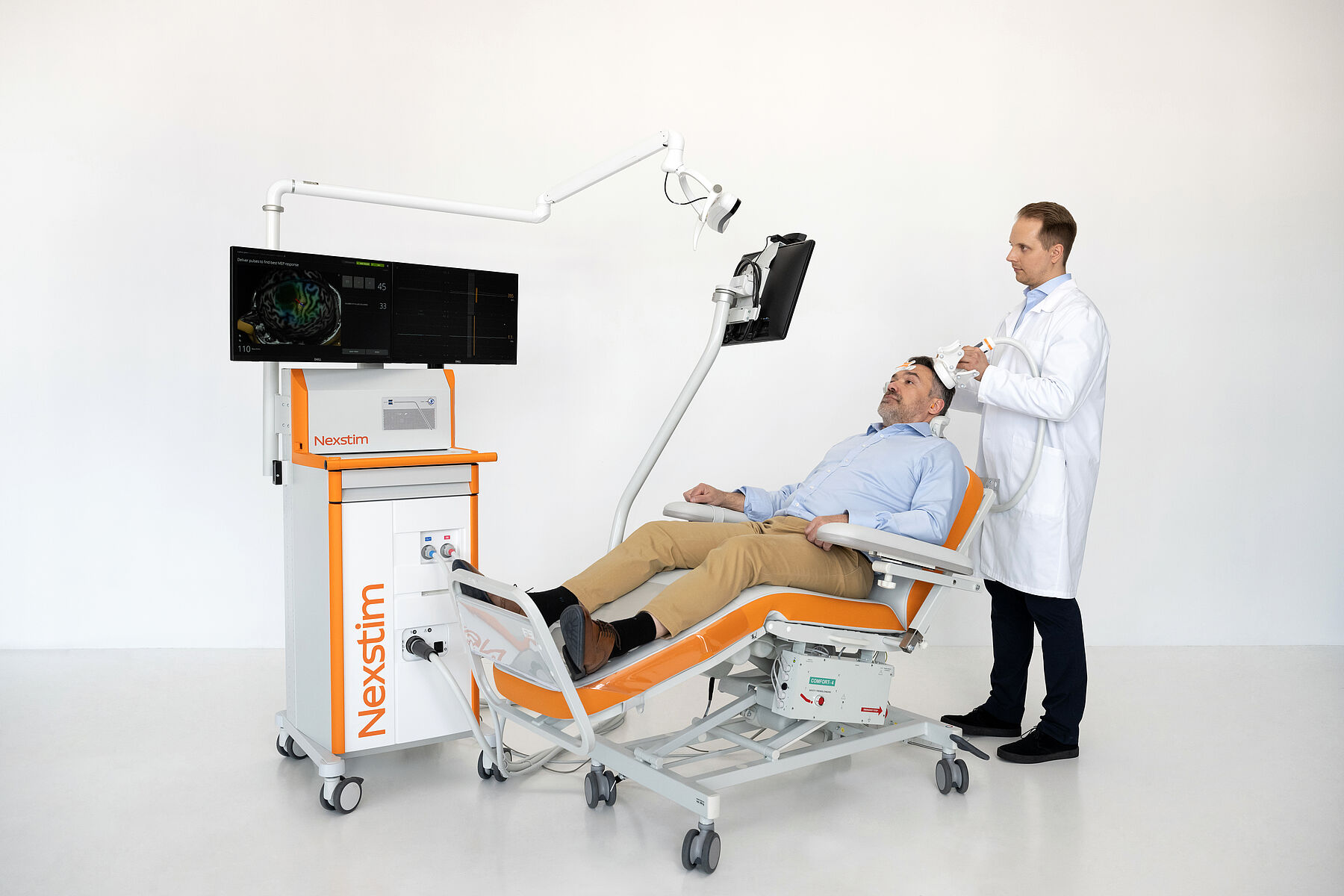
Nexstim's current system is the NBS 6. It is modular by design: a hospital can order diagnostic modules, therapy modules or both, and add capabilities later. Underneath is the same E-field navigation. The system calculates where the induced electric field actually lands in the cortex, shows it on the patient's MRI in real time, and records the coil position so the same target can be found again in the next session.
That last point is the reason navigation matters for therapy. A course of TMS for depression is typically delivered over several weeks of daily sessions. Without navigation, the coil is placed by scalp measurements and the target drifts from day to day. With navigation, the target is chosen on the individual brain and reproduced session after session. Nexstim describes this as personalized targeting, and it is the central technical argument for navigated over non-navigated therapy.
What is cleared in 2026, and where
Regulatory status is the honest place to start, because it differs by region. In the United States, the NBS 6 is FDA-cleared for pre-surgical mapping of the speech and motor cortices, for the treatment of major depressive disorder in adults who have not improved on antidepressant medication in the current episode, and, since March 2026, as an adjunct treatment for adolescents aged 15 to 21 with major depression and for adults with obsessive compulsive disorder.
In the European Union, the NBS 6 is CE-marked under the MDR for pre-surgical mapping, for the treatment of major depression and chronic neuropathic pain, and, since February 2026, for post-operative rehabilitation. Australia authorised commercial distribution for diagnostics and post-operative rehabilitation earlier this year. Nexstim reported 135 systems worldwide with a therapy application installed at the end of 2025, 52 of them in the United States and 83 in Europe and other regions, and in July 2026 announced a repeat order for ten NBS 6 systems from a single distributor, with diagnostic and therapy modules included.
None of these clearances automatically applies in the UAE or elsewhere in the GCC. Each indication follows local registration, and this article makes no claim about which therapy indications are available in any specific market. What the list shows is the direction of travel: the platform is being certified for treatment, indication by indication, on the strength of controlled trials.
Post-operative rehabilitation: the indication closest to neurosurgery
For a neurosurgical department the most interesting therapy indication is the newest European one. The MDR certificate covers navigated repetitive TMS as an adjunct to motor rehabilitation for adults who develop new or worsening upper limb motor deficits after brain tumour surgery. The supporting evidence is a multicentre study from the neurosurgical departments of Heidelberg University Hospital, the Technical University of Munich, Charité in Berlin and King's College, in which low frequency navigated rTMS to the uninjured motor cortex, combined with physiotherapy, was associated with better motor recovery than physiotherapy with sham stimulation.
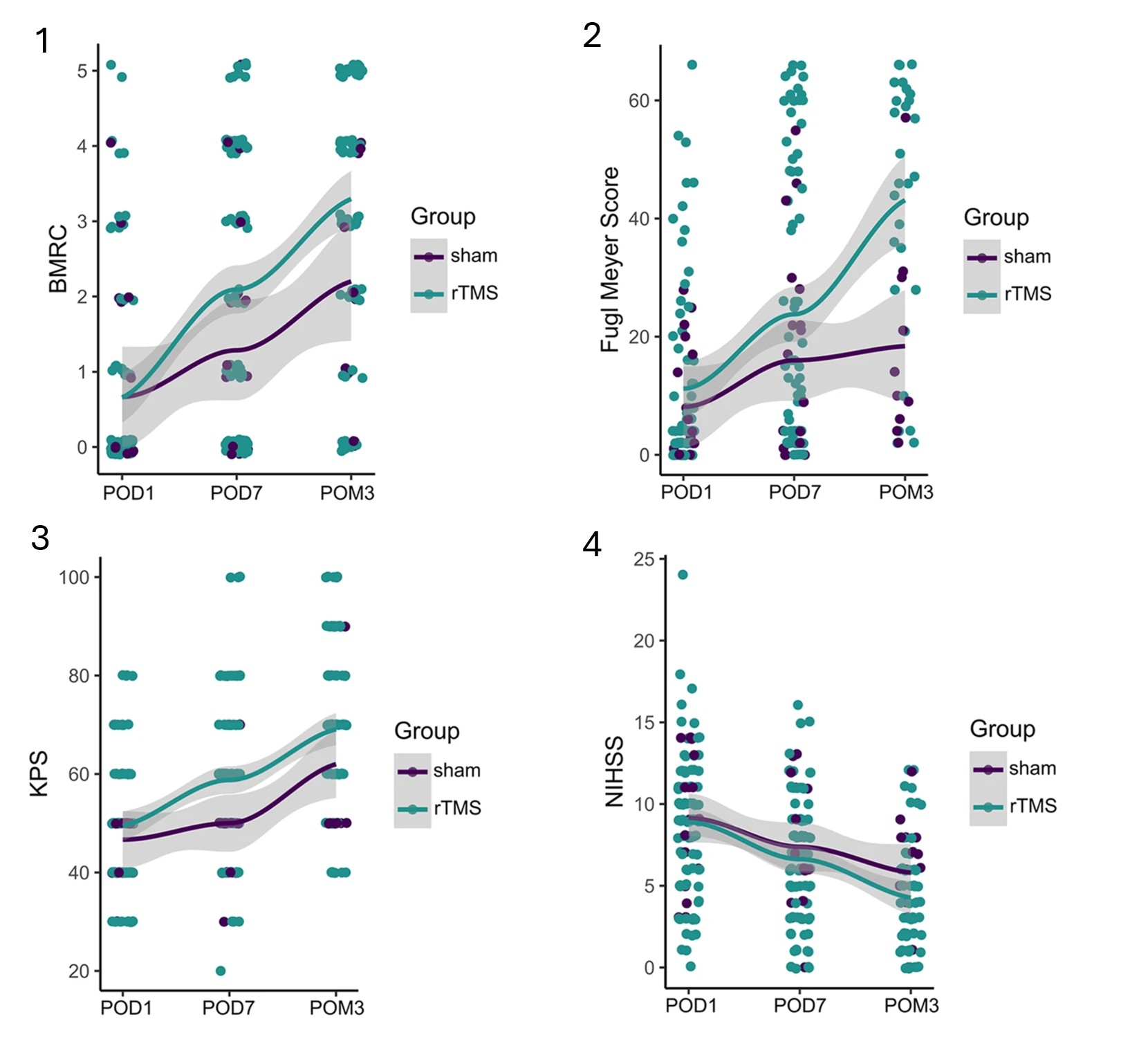
The logic is elegant. The system that mapped the motor cortex before the operation already holds the patient's MRI and the exact location of the motor hand area. If the patient wakes with a weak arm, the same system can be used on the ward in the first days after surgery to stimulate the healthy hemisphere while the physiotherapist works. Mapping and rehabilitation become two uses of one dataset, and the neurosurgeon stays involved in the recovery, not only the resection.
Where the evidence is still open
It would be easy to overstate this field, so it is worth being precise about what is not yet settled. Stroke is the obvious next target, and the results so far are mixed. The E-FIT randomised trial, published in Stroke in 2023, tested electric field navigated 1 Hz rTMS as an adjunct to intensive rehabilitation three to twelve months after stroke and found that the stimulation did not add to the benefit of the rehabilitation itself in a mixed population of lesion sites and sizes. Systematic reviews published in 2026 reach a similar conclusion: navigation improves the precision and reproducibility of stimulation, but whether navigated rTMS improves upper limb recovery after stroke remains unclear, and most positive stroke studies used non-navigated protocols.
Chronic neuropathic pain is CE-marked, and Nexstim has supported a pilot study of a new pain protocol at Helsinki University Hospital, but the evidence base is smaller than for depression. Newer research directions, including lesion network mapping to choose stimulation targets in acute stroke, are in phase 2 trials and should be read as promising rather than proven. A hospital planning a therapy service should build on the cleared indications and treat the rest as research.
What this means for a GCC hospital
Brainz brings Nexstim to the region for what it does best today: functional mapping that feeds the surgical plan. The motor and speech maps export into Brainlab Elements, so the eloquent cortex is visible during planning and in the navigation view during surgery, and the workflow is covered in our neurosurgery overview.
The therapy side changes the investment case rather than the workflow. A hospital that installs NBS 6 for mapping owns a modular platform, and the departments that could use it later, psychiatry, pain medicine and rehabilitation, are usually in the same building. Whether and when those modules can be activated depends on local registration and on each department's clinical governance, and Brainz can support that assessment with the manufacturer's regulatory documentation for the relevant market.
If your neurosurgery programme is considering navigated brain mapping and you want to understand how the platform could grow, talk to us. For the full picture of what Nexstim offers, see the Nexstim partner page.
Product availability, indications, regulatory status and clinical use vary by country and follow manufacturer documentation and applicable regulatory approvals. Trademarks belong to their respective owners.