Pedicle Screw Accuracy as a Quality Metric: What the Data Says
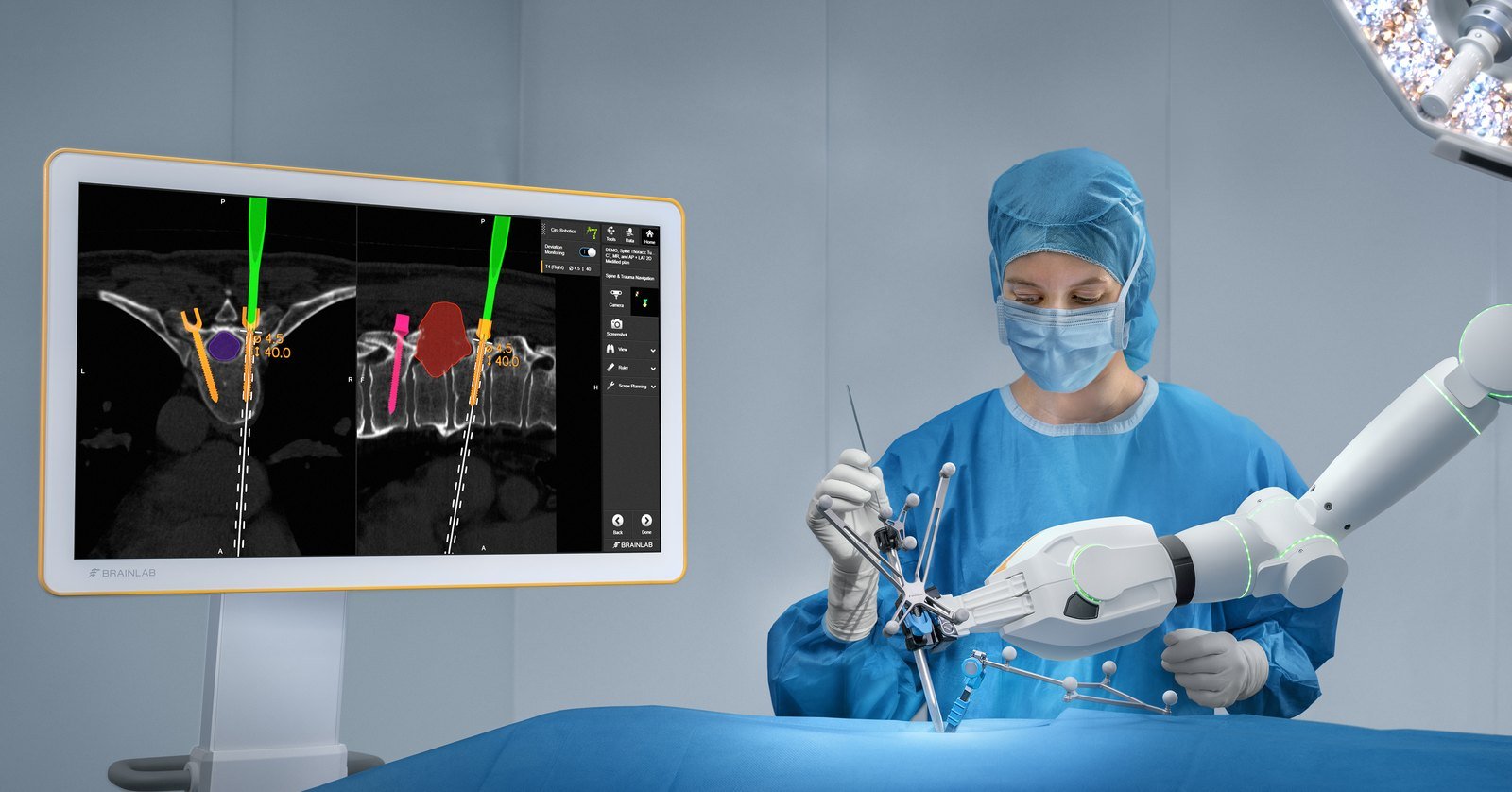
Most spine programs track infection, length of stay and readmission. Fewer track the thing the surgeon controls most directly: where the screw went. Pedicle screw accuracy can be graded, compared and trended, and the published data links it to revision rates and cost. That makes it a practical quality metric, and it is where Brainlab spine navigation and robotics earn their place in a program.
How accuracy is actually measured
The standard tool is the Gertzbein-Robbins scale, read on postoperative CT. Grade A means the screw sits fully inside the pedicle. Grade B means a breach of 2 mm or less. Grades C to E describe breaches of more than 2 mm, up to more than 6 mm. Grades A and B are counted as clinically acceptable. One caution for any program building a dashboard: a single percentage hides the direction of the error. In one comparison, medial deviation was the most common error in both groups, and that is the direction that matters most near the canal.
What navigated screw placement shows in the data
A 2024 meta-analysis in SPINE pooled 30 studies, 17,911 patients and 24,600 pedicle screws. Clinically acceptable placement was 96.2 percent with navigation and 94.2 percent with conventional technique, a small absolute gap that was statistically significant. The authors also report that postoperative screw revision favored navigation. Single center data points the same way. A comparison of O-arm based navigation with freehand placement (35 and 25 patients) found 95.81 versus 90.00 percent acceptable screws, and revised screws of 4.19 versus 10.00 percent. In the thoracic spine alone, 2 of 86 screws were revised with navigation against 10 of 87 freehand.
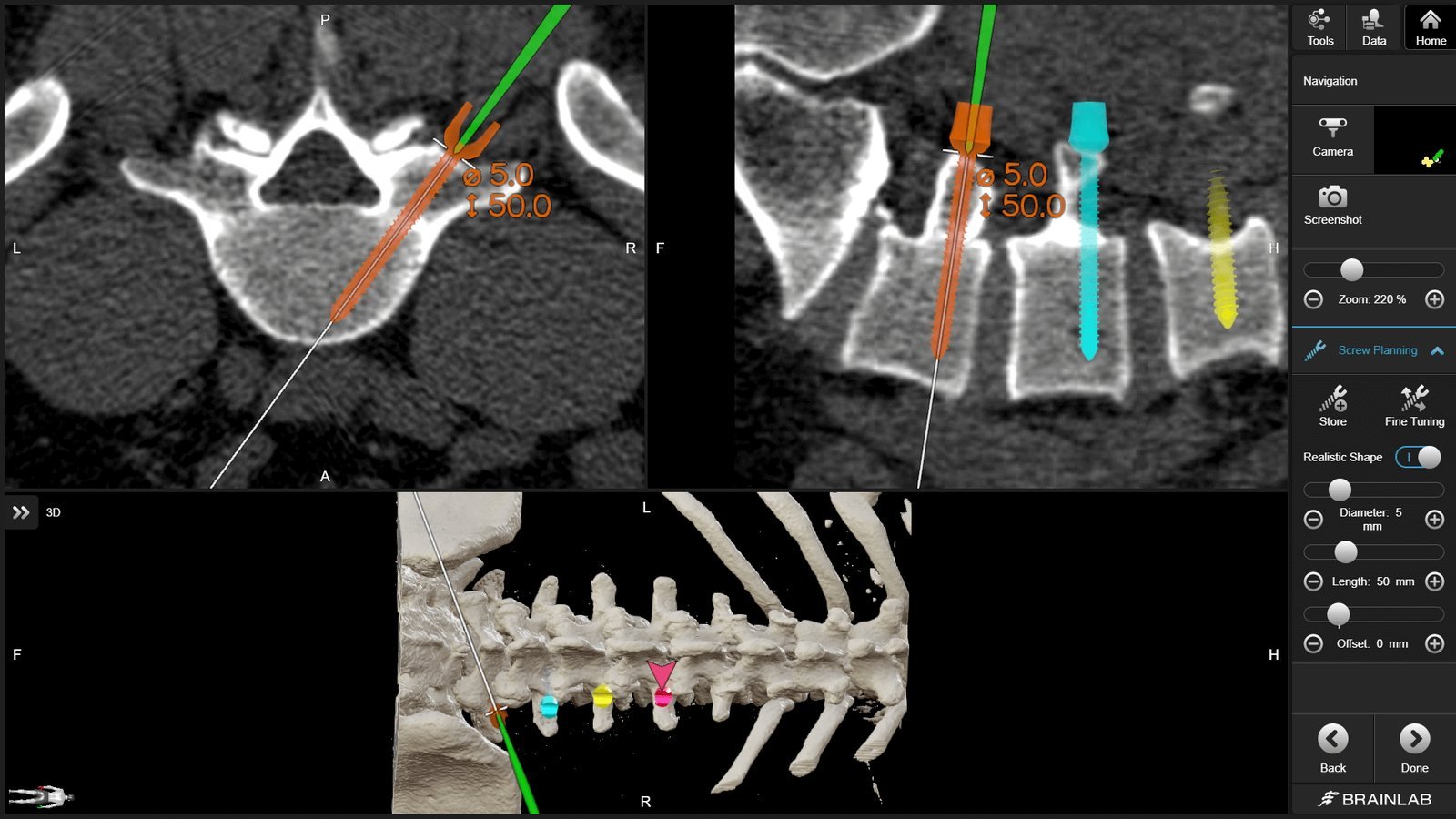
These are not randomized trials, and many of the studies are retrospective. The honest reading is that navigation raises the share of acceptable screws by a few points on average, with the larger benefit seen in harder anatomy such as the thoracic spine.
From accuracy to revision and cost
The economic case is easier to see in one older but widely cited analysis. A study in The Spine Journal compared CT based navigation with fluoroscopy in 502 patients and 5,132 screws. Accurate screws were 92.5 percent with navigation and 86.9 percent without. At one year, 2 patients in the navigation group needed revision against 15 patients (6 percent) in the control group. The authors estimated a reoperation cost of 12,618 US dollars and an incremental cost of 15,961 dollars per reoperation avoided, and concluded that the technology becomes cost saving at centers performing more than about 254 instrumented procedures per year.
Those are United States figures from a single institution, so a GCC hospital should not copy them. The method is what transfers: count your own reoperations, price them with your own tariffs, and compare against the capital and maintenance of the system. Volume is the variable that decides the result.
Where robotics fits in 2026
The newer question is no longer navigation versus freehand but robot versus navigation. Several 2026 papers compare the two, including meta-analyses and a single center comparison, and the field has not settled on a winner. A 2025 systematic review in the European Spine Journal covering 15 studies, 1,487 patients and 7,274 screws found 98.15 percent of screws graded A or B across navigated and robotic work, which suggests that both approaches can reach a high ceiling when planning is done well. The same review noted that small deviations from the plan did not excessively affect accuracy.
For the program, the practical point is that accuracy comes from the whole chain: a good plan, registration the surgeon trusts, and a way to hold the trajectory. Brainlab Cirq is a modular, vendor neutral robotic arm that auto aligns to the planned trajectory, with a bone anchored drill guide designed to prevent skiving. It works alongside Spine and Trauma Navigation, which offers radiation free surface matching or automatic registration through Loop-X. For a closer look at what robotics does and does not change, see our piece on Cirq expectations versus reality.
How a GCC spine program can start measuring
Start small. Grade the postoperative CT of every instrumented case for a quarter, record the grade and the direction of any breach, and log screw revisions at 30 days and one year. Report it at the department meeting next to infection and readmission. Within a few months the program has a baseline, and any decision on navigation or robotics becomes a conversation about its own numbers rather than a vendor brochure.
Brainz supports this with installation, surgeon training and clinical support for Brainlab spine systems across the UAE and GCC. If you would like to review your own accuracy data or see the workflow on your cases, request a consultation.
Product availability, indications, regulatory status and clinical use vary by country and follow manufacturer documentation and applicable regulatory approvals. Trademarks belong to their respective owners.