Radiation Dose Stewardship: Imaging More, Exposing Less
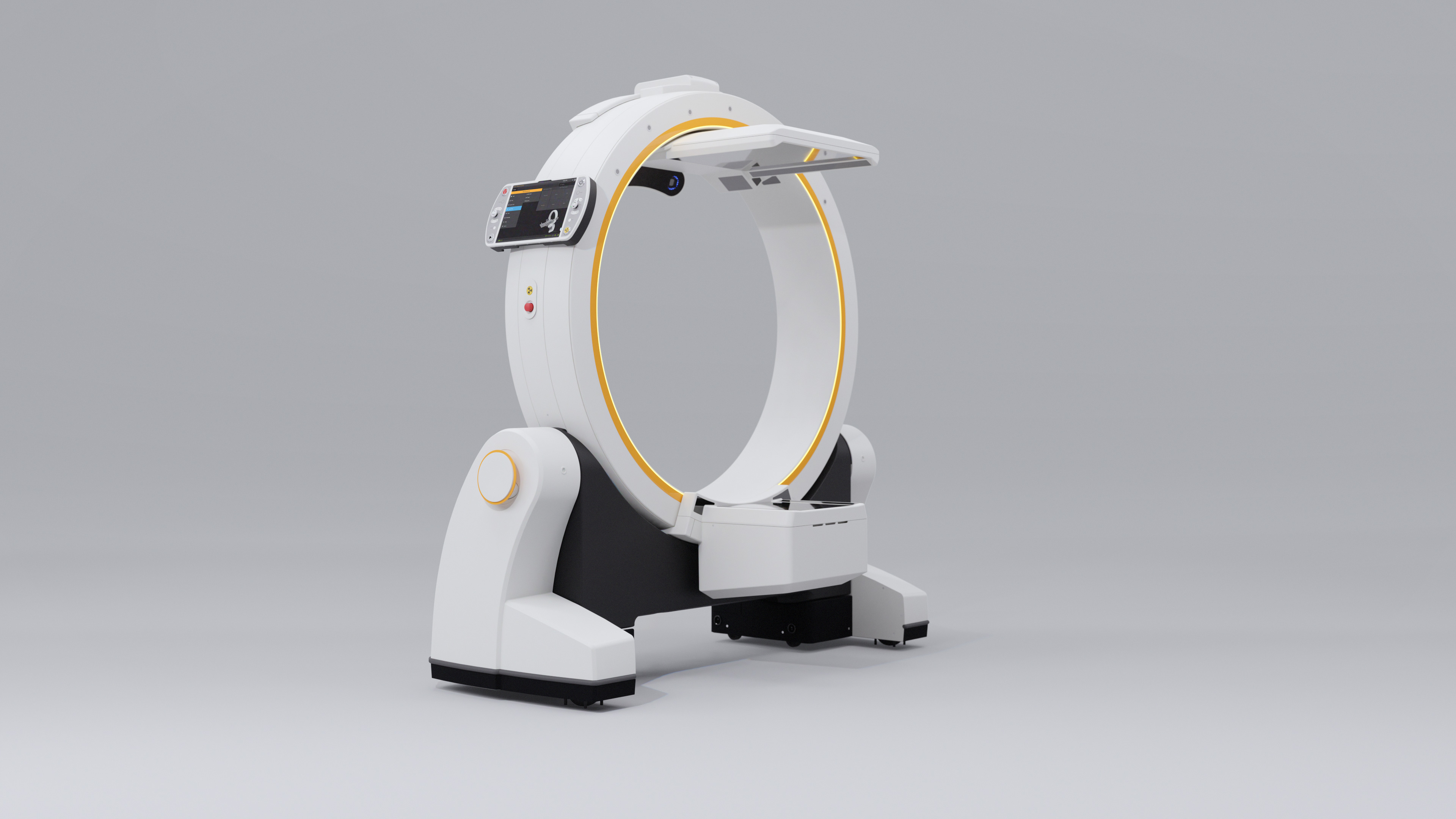
Image guidance made modern surgery safer and less invasive. It also created an occupational reality nobody planned for: the surgical team stands next to the radiation source, case after case, for an entire career. Dose stewardship is the discipline of getting more information from every exposure while sending less radiation into the room, and it has quietly become a selection criterion when hospitals plan a hybrid OR. Brainlab imaging is one of the clearest examples of how technology moves that number down.
The exposure problem is occupational, not only clinical
A patient is imaged for one procedure. The team is present for hundreds of procedures a year. In conventional fluoroscopy-guided spine and trauma fixation, images are taken repeatedly while staff remain at the table, and published studies of operating room radiation consistently frame cumulative staff exposure as the long-term concern. Lead aprons help but do not cover everything, which is why radiation safety practice is built on the ALARA principle: keep every dose as low as reasonably achievable.
One planned spin instead of many unplanned shots
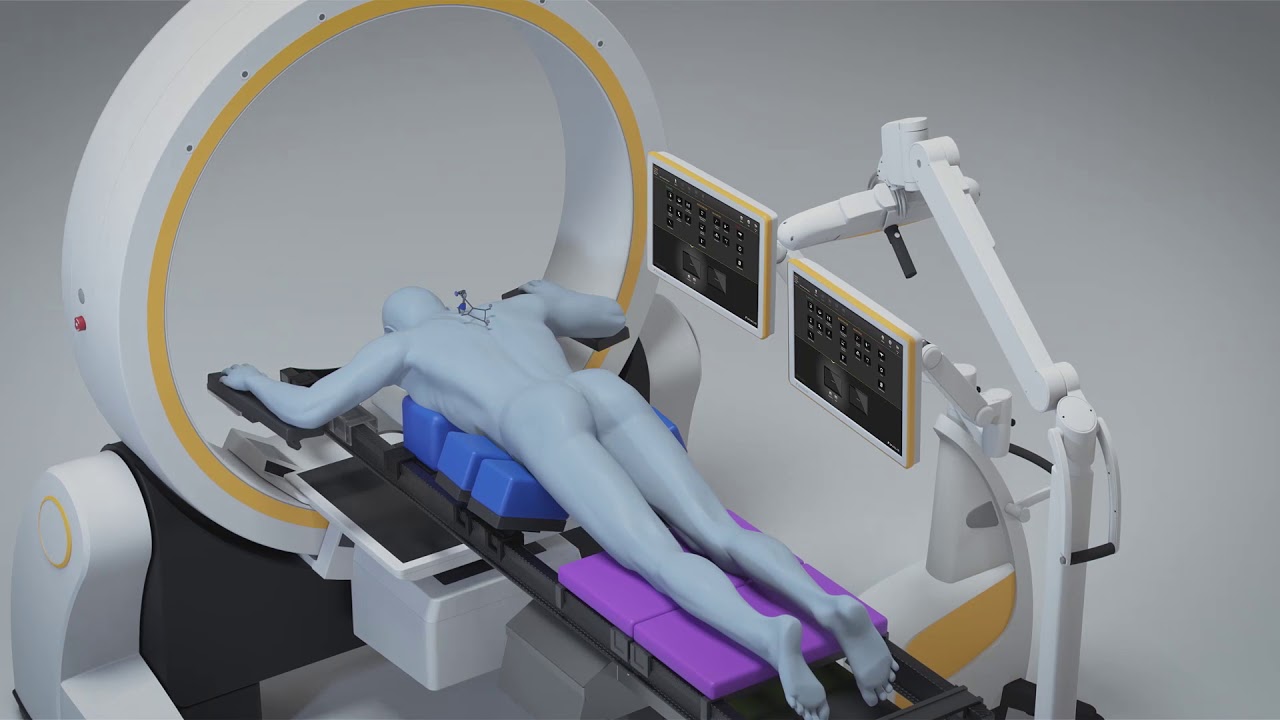
Navigation changes the economics of imaging. Instead of repeated fluoroscopy shots to check position, the workflow moves to a single intraoperative 3D acquisition that registers the patient to spine navigation. During that acquisition the team can step away from the source, and afterwards instruments are guided on the registered dataset without continuous imaging. A prospective randomized trial published in European Spine Journal found that navigation based on intraoperative cone-beam CT reduced radiation compared to fluoroscopy-guided thoracolumbar instrumentation, and later comparative work has reported lower effective doses with cone-beam navigation than with conventional fluoroscopy workflows.

What Loop-X brings to dose stewardship
Loop-X is a mobile imaging robot delivering intraoperative 2D and 3D cone-beam CT, designed with dose reduction in its imaging chain. Its off-centered acquisition lets the scan concentrate on the region of interest rather than irradiating anatomy that is not part of the question. Registration to navigation happens automatically from the scan itself, which removes the extra imaging that manual re-registration used to cost. And because the final position can be confirmed with an intraoperative scan before the patient leaves the table, the postoperative CT trip and its additional dose can often be avoided when the team deems it unnecessary.
Stewardship is a habit, not a device
Hardware sets the ceiling, protocols set the reality. Teams that treat dose as a managed quantity use low-dose acquisition protocols where image quality allows, image only the levels the case needs, step behind shielding during acquisitions, and track dose per case the way they track operative time. For cranial procedures, navigation platforms can register the patient with radiation-free surface matching, so some workflows start with no ionizing radiation at all. None of this requires heroics, only a workflow designed around the question each image is meant to answer.
What Brainz adds
Brainz supports hospitals across the UAE and GCC in planning imaging and navigation as one program: room and workflow design, installation, team training on low-dose protocols, and long-term service. If your OR still answers most intraoperative questions with fluoroscopy, a conversation about dose stewardship is a practical place to start.
Product availability, indications, regulatory status and clinical use vary by country and follow manufacturer documentation and applicable regulatory approvals. Trademarks belong to their respective owners.