TraumaCad: Planning Every Implant Before the First Incision

Most surprises in orthopedic surgery are not discovered in the operating room. They are inherited from planning that never happened. Digital templating closes that gap, and Brainlab TraumaCad is the platform Brainz brings to orthopedic teams across the UAE and GCC for exactly that purpose.
From X-ray to surgical plan
TraumaCad lets the surgeon overlay implant templates directly onto the patient's calibrated X-ray. Sizing, offset and alignment are decided on the image, not estimated in theatre. The platform carries a library of roughly 4,000 implant templates across manufacturers, so planning reflects the implants the hospital actually stocks.
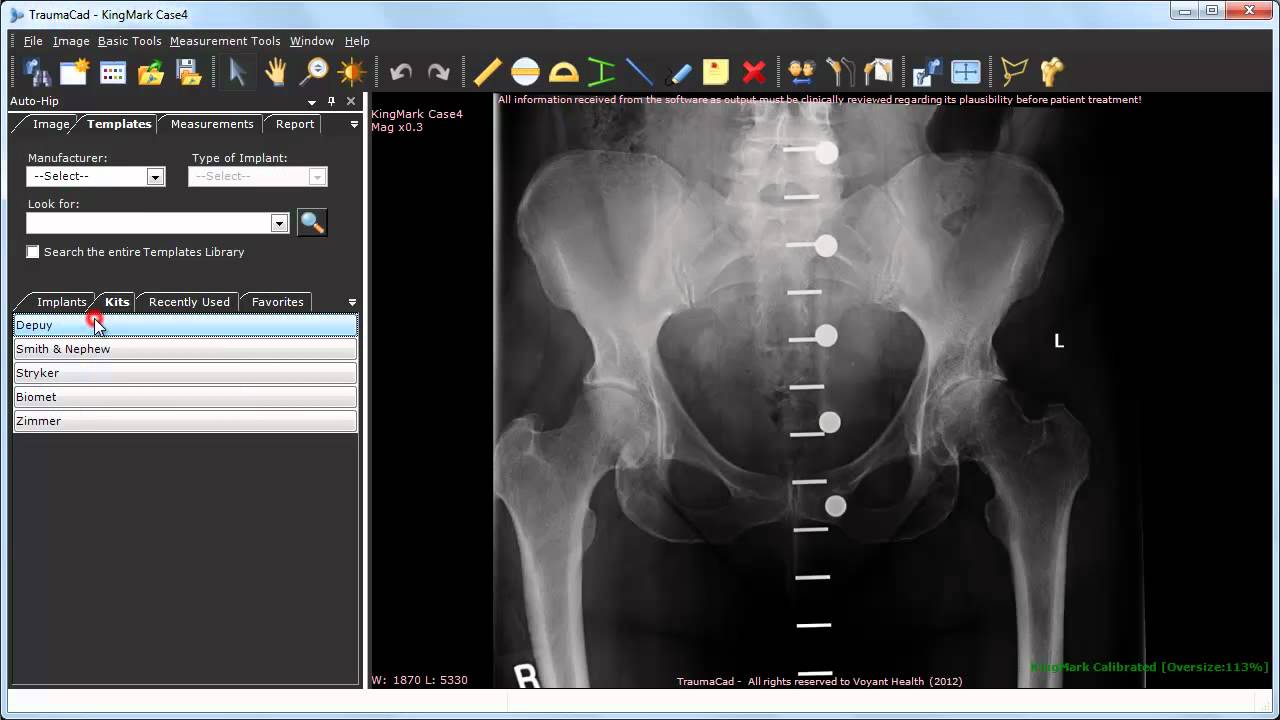
Hip, knee, trauma and deformity in one platform
Templating is often associated with hip and knee arthroplasty, and TraumaCad covers both. The same platform also plans trauma fixation and deformity correction, which makes it a daily tool for the whole orthopedic department rather than a single-procedure product.
Built into hospital workflow
TraumaCad integrates with the hospital PACS, so images flow in and approved plans flow back into the patient record. The plan becomes part of the case documentation, visible to the team before the patient reaches the operating room.
What Brainz adds
Brainz handles deployment, PACS integration and surgeon onboarding, and connects TraumaCad to the wider orthopedic technology program a hospital is building. Planning is the least expensive place to remove risk from surgery. It is also the easiest to start with: a demonstration on your own cases takes one session.
Product availability, indications, regulatory status and clinical use vary by country and follow manufacturer documentation and applicable regulatory approvals. Trademarks belong to their respective owners.